Walk into any Indian supermarket and you will find dozens of honey brands lining the shelves — each claiming to be pure, natural, and healthy. But most of the honey sold in India (and globally) has been processed in ways that strip away the very qualities that make honey beneficial. Understanding the difference between raw honey and commercial honey is the first step to making an informed choice.
What Is Raw Honey?
Raw honey is honey that has been extracted from the hive and minimally processed — typically just coarse-strained to remove beeswax fragments and large debris. It is not heated above natural hive temperature (around 35°C), not pressure-filtered, and not blended with honey from other sources or countries.
Raw honey retains:
- Active enzymes (diastase, invertase, glucose oxidase) that aid digestion and produce hydrogen peroxide — honey's natural antibacterial agent
- Pollen grains that identify the floral source and provide trace nutrients
- Volatile aromatic compounds that give each honey variety its distinctive flavour
- Propolis traces with antimicrobial properties
- Natural antioxidants (flavonoids and phenolic acids) in their active form
What Is Commercial Honey?
Commercial honey — the kind sold by most major brands — goes through industrial processing designed to create a uniform, shelf-stable product. This typically includes:
Ultra-Filtration
Industrial filtration removes all pollen grains from honey. Without pollen, it is impossible to identify the floral or geographic origin of the honey. This is why ultra-filtered honey is sometimes called "laundered" honey — its origin story has been erased. The primary reasons brands ultra-filter are to prevent crystallisation (a selling point for uninformed consumers) and to disguise the honey's true origin.
Pasteurisation
Commercial honey is heated to 70-80°C (sometimes higher) to kill yeast and delay crystallisation. This process destroys heat-sensitive enzymes (diastase activity drops to near zero), reduces antioxidant levels, and eliminates the volatile compounds responsible for flavour complexity. Pasteurised honey is essentially a sugar solution with some residual minerals.
Blending
Most commercial brands do not source honey from a single apiary or even a single country. They purchase bulk honey from aggregators who blend honey from multiple sources — sometimes mixing Indian honey with cheaper Chinese imports. Blending allows brands to maintain a consistent colour and flavour year-round, but it eliminates the concept of terroir that makes each honey variety unique.
Syrup Addition
The worst offenders add sugar syrup (rice syrup, corn syrup, or modified starch syrup) to increase volume and reduce cost. The CSE study found this in 77% of tested brands in India.
Why Does Processing Matter?
The health claims associated with honey — antibacterial properties, wound healing, antioxidant protection, digestive support — are all tied to compounds that exist in raw honey but are destroyed or removed during commercial processing. When you buy heavily processed honey, you are buying an expensive sugar with no meaningful health benefit over refined sugar.
The Enzyme Difference
Diastase is an enzyme naturally present in honey. Its activity level is a direct indicator of how gently the honey has been processed. Raw honey has a diastase number of 8-40 (depending on variety). Pasteurised honey often falls below 3. The Codex Alimentarius (international food standard) considers diastase below 8 as an indicator of excessive heat treatment.
The Pollen Difference
Pollen is honey's fingerprint. Through melissopalynology (pollen analysis), scientists can identify exactly which flowers the bees visited and where the honey came from. When pollen is removed through ultra-filtration, there is no way to verify origin claims — "pure Himalayan honey" could actually be Chinese syrup-blended honey.
What to Look for When Buying Honey
- Look for "raw" or "unprocessed" on the label. In India, there is no legal standard for "raw honey" yet, so this label is not regulated — but brands that use it tend to be more transparent about their processing.
- Check for crystallisation. If a honey brand proudly advertises "never crystallises," that is a red flag, not a feature. All real honey crystallises eventually.
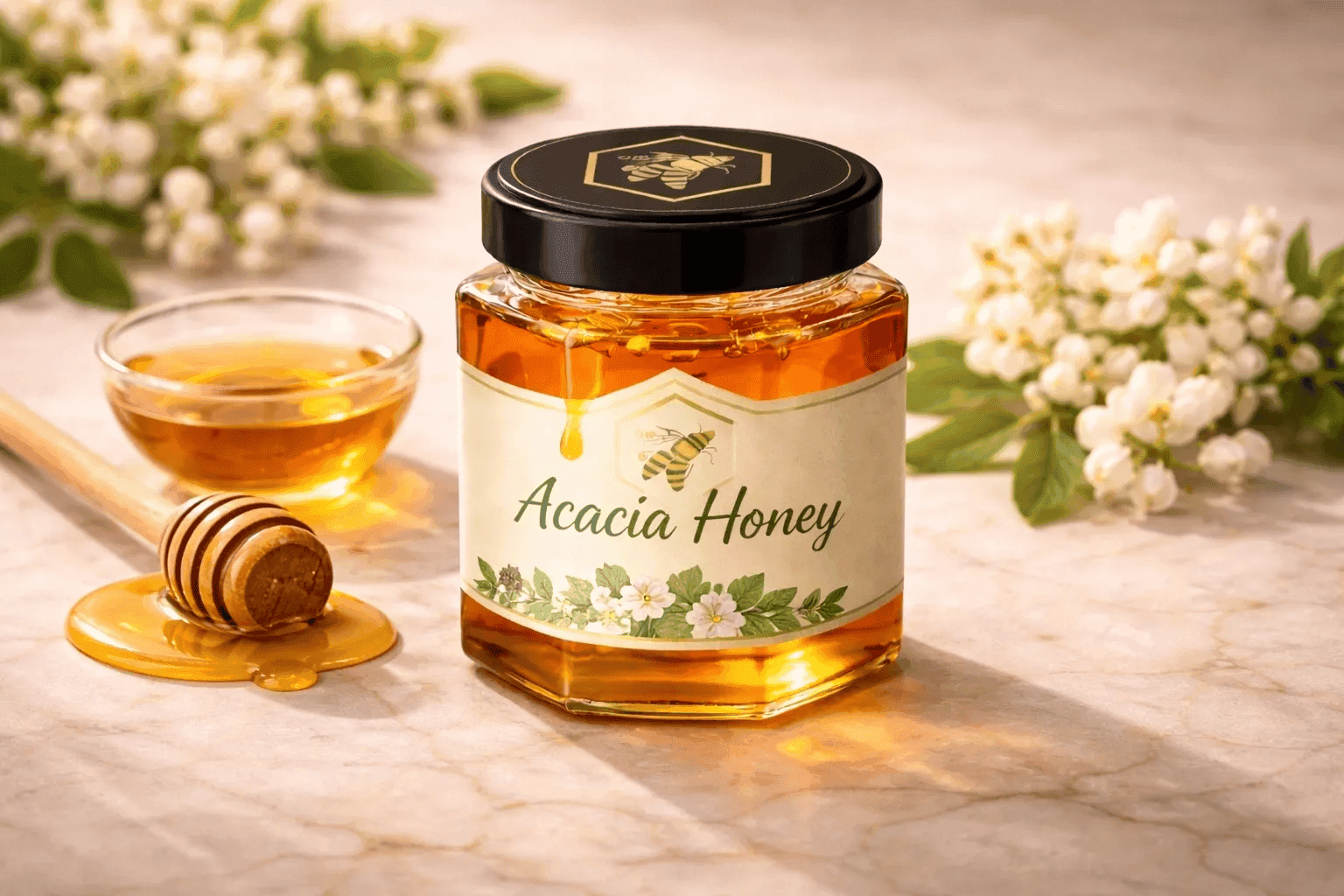
- Look for single-origin or monofloral varieties. Brands that specify the floral source (tulsi, acacia, mustard) and geographic origin are more likely to be genuine. Generic "pure honey" with no origin details is suspicious.
- Demand batch traceability. Can the brand tell you exactly which apiary produced the honey in your jar, when it was harvested, and what the lab test results were? If not, how can they guarantee purity?
- Check the price. Genuine raw honey costs more than processed honey because the yield is lower and the handling is more careful. If a brand is selling 500g of "pure natural honey" for 150 rupees, it almost certainly is not what it claims to be.
The NectaBee Approach
At NectaBee, every jar is:
- Cold-extracted at hive temperature (around 35°C)
- Coarse-strained — never ultra-filtered, so pollen is retained
- Never pasteurised — diastase activity remains high
- Single-origin — each variety comes from a specific floral source and region
- Batch-traceable — scan the QR code to see the apiary, harvest date, and full lab report
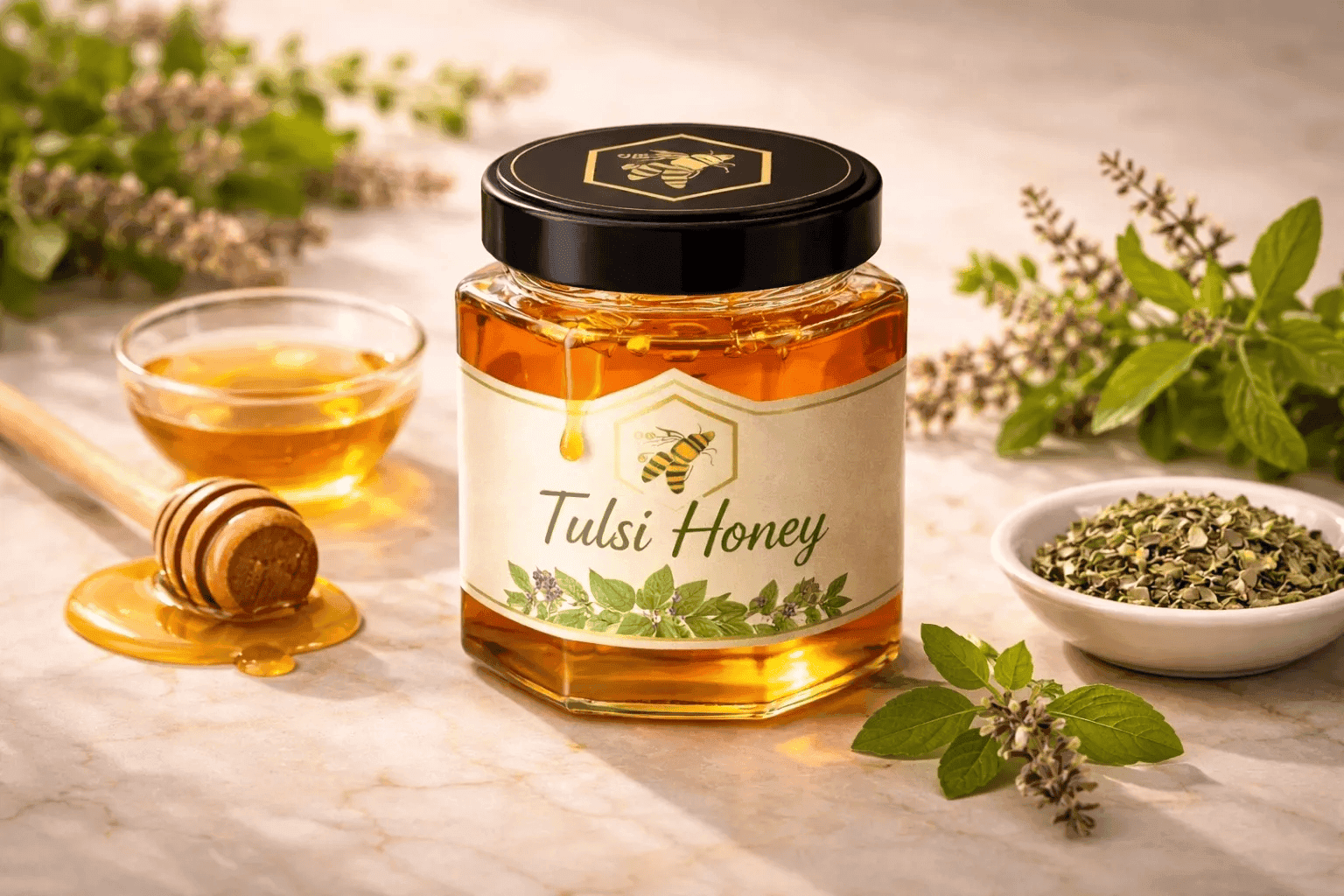
We manage our own apiaries and beekeeping operations. There is no middleman, no aggregator, and no blending. When we say Tulsi Honey, we mean the bees foraged on tulsi flowers in Madhya Pradesh during the late monsoon — and we can prove it.
The Bottom Line
Raw honey and commercial honey may look similar in the jar, but they are fundamentally different products. One is a living food with enzymes, pollen, and therapeutic compounds intact. The other is a processed sugar product with a premium price tag. The choice, once you understand the difference, is clear.